
Quick answer: STERLING and 925 generally point toward sterling fineness, while EPNS and SILVER PLATE identify plated material. A mark is a starting clue, not stand-alone authentication.
Common silver marks at a glance
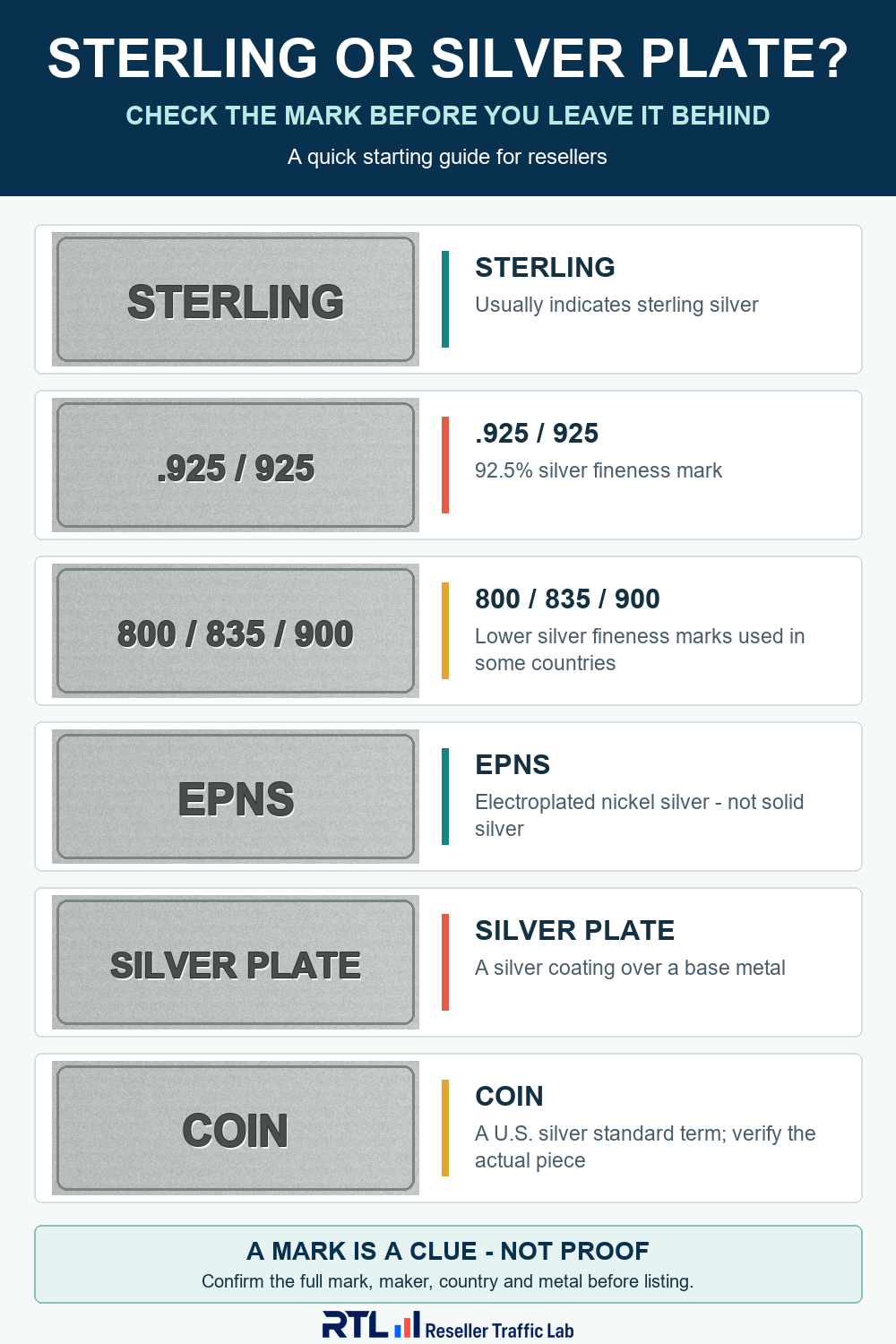
What real marks look like
Marks are usually much smaller, less even and harder to read than a reference drawing. Photograph the whole mark first, then enlarge the image for research.
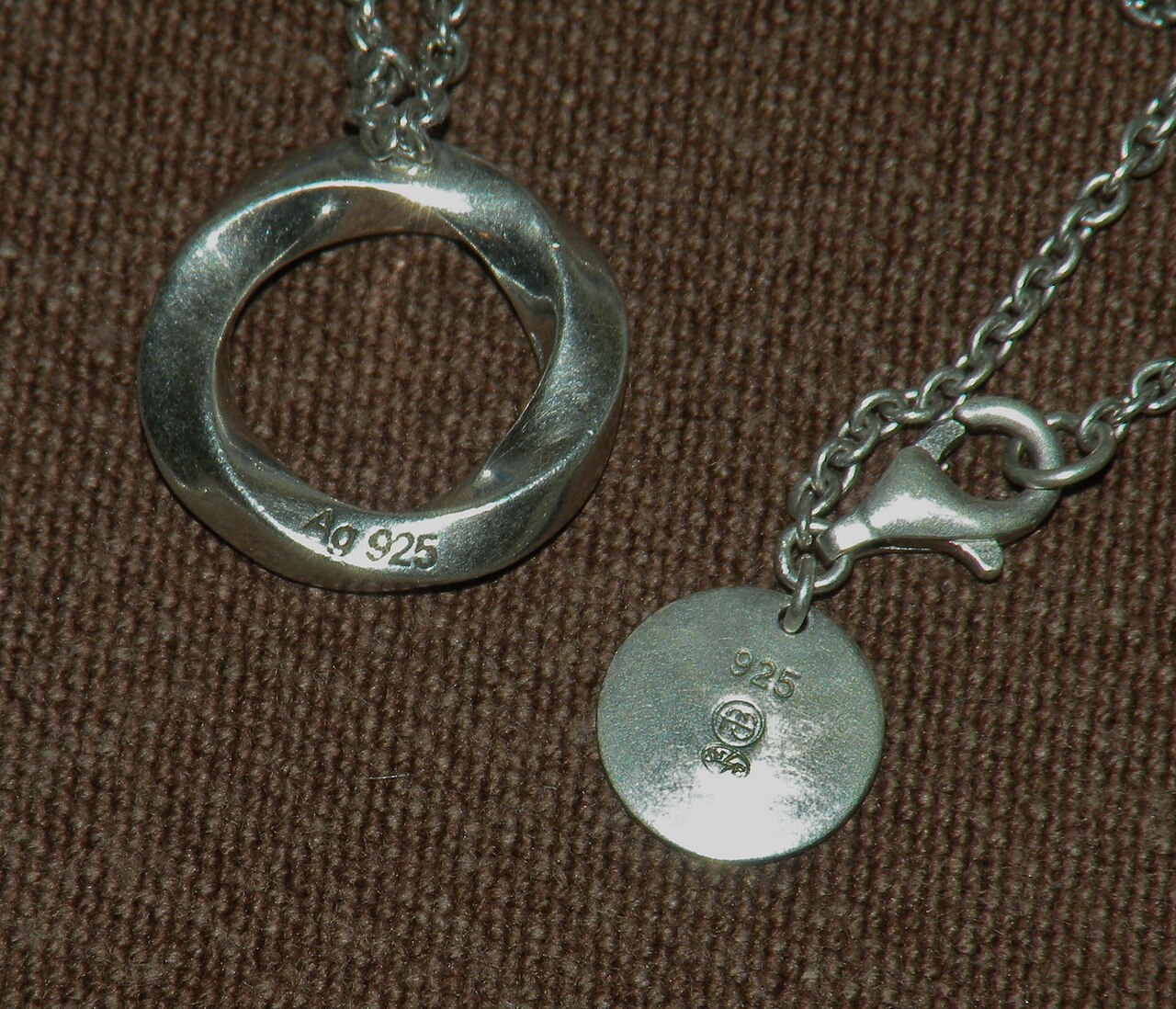

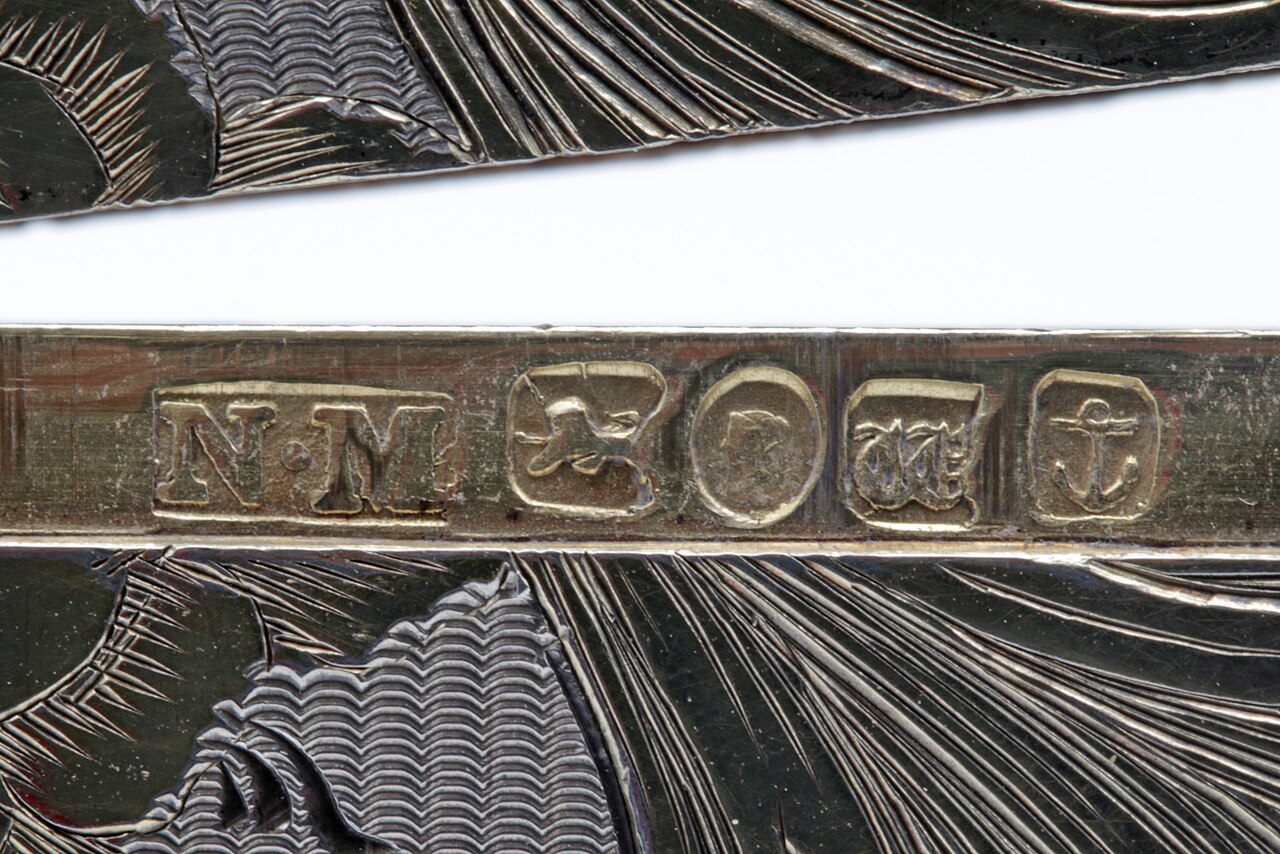

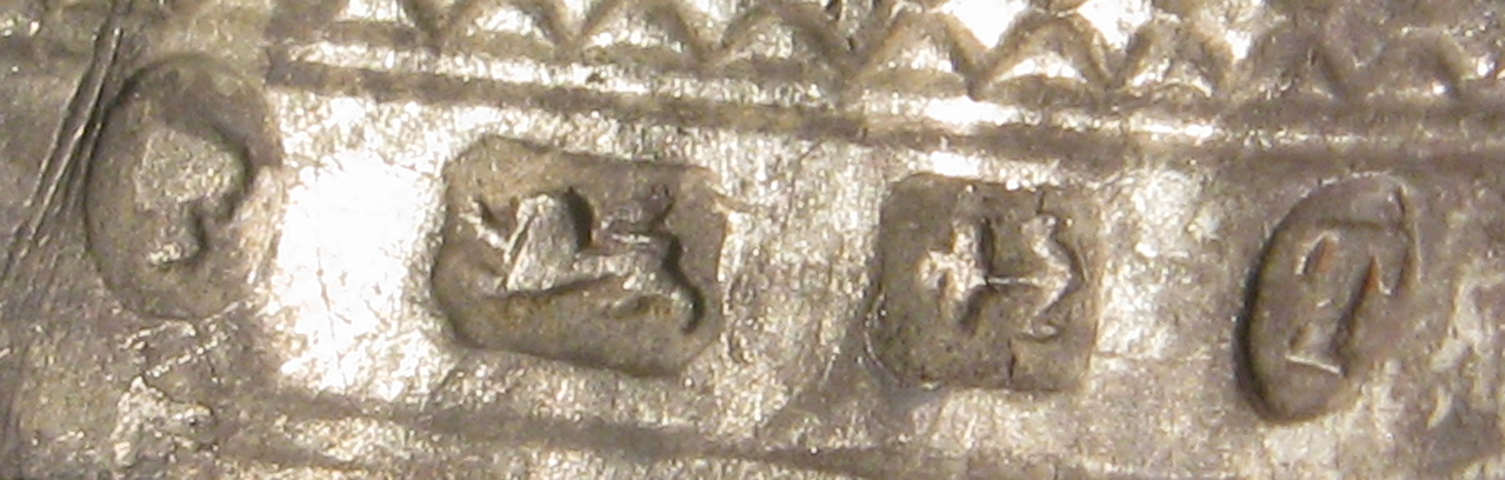
.jpg)
What common marks may tell you
| Mark | What it may indicate | Seller caution |
|---|---|---|
| STERLING, STER. or 925 | Generally indicates a 925-parts-per-thousand silver standard. | Check the complete mark and the item. A stamp can be copied, altered or applied to only one component. |
| 800, 835 or 900 | Numerical fineness marks used for silver standards in a number of countries. | Do not call these sterling. Preserve the exact fineness in the description and research the country and hallmark system. |
| EPNS | Electroplated nickel silver: a silver coating over a nickel-silver base alloy. | EPNS is not solid silver. Nickel silver itself is a copper-nickel-zinc alloy and contains no silver unless plated. |
| EP, EPBM or electroplate | Usually identifies an electroplated item; EPBM commonly means electroplated Britannia metal. | Expand only abbreviations you can verify. Photograph the mark and describe the visible base metal where wear exposes it. |
| SILVER PLATE or SILVERPLATE | A silver coating over a base-metal object. | Do not shorten this to silver or sterling in the title. Plated objects can still have collectible value by maker, pattern and form. |
| COIN or COIN SILVER | A historic U.S. standard term generally associated with silver below sterling fineness, commonly around 900. | Research the maker and era. The word coin is not, by itself, an assay result or exact date. |
| Maker or sponsor initials | Can identify the firm or person associated with submitting or producing the piece. | Initials alone do not establish silver content. Match the exact font, shield shape and companion marks. |
| Date letter or assay-office symbol | In formal hallmark systems these may help identify where and when an item was assayed. | Read the complete group of marks. A letter by itself can be a pattern, model or factory code instead. |
Read the full hallmark, not one symbol
A formal British hallmark provides a useful model for careful reading: the compulsory group includes a sponsor's mark, a fineness mark and an assay-office mark. A date letter may also be present, but it is optional on modern UK work. Other countries and periods use different systems.
- Photograph every mark together before separating individual symbols.
- Record the exact letters, numbers, punctuation, shield shapes and symbols.
- Identify the country's hallmark system before assigning a maker or date.
- Match the exact mark version, not merely similar initials.
- Check whether the mark belongs to the object, a removable component or a later repair.
Common reseller traps
| Mark or description | What sellers should know |
|---|---|
| WEIGHTED STERLING | The exterior may be sterling while the base is filled with cement, plaster or another material. Do not use the total object weight as silver weight. |
| STERLING HANDLE | A knife or serving piece may have a hollow sterling handle attached to a stainless or base-metal blade. Describe the components separately. |
| IS | Often appears as part of an International Silver Company mark on American silverplate. It does not mean “is silver.” Research the complete company mark and pattern. |
| A1, AA or QUADRUPLE PLATE | These generally refer to plating quality or deposit, not solid-silver fineness. They remain silverplate terms. |
| 90 or 100 on European flatware | Some numerical marks on plated sets describe the amount of silver used across a production batch, not 90% or 100% silver fineness. |
| SHEFFIELD PLATE or MADE IN SHEFFIELD | Do not assume this means Old Sheffield Plate. Later electroplate made in Sheffield can carry Sheffield wording; construction and maker research matter. |
| 958 or 999 | These can indicate Britannia-standard or fine silver in appropriate hallmark systems. Verify the full mark before using either description. |
Screening clues are not proof
- Magnet: strong attraction suggests a magnetic base metal, but lack of attraction does not prove silver. Many non-silver alloys are also nonmagnetic.
- Wear: exposed yellow, coppery or gray base metal can indicate plating, but dirt, solder and repairs can confuse the appearance.
- Tarnish: silver can tarnish, but color and polish response are not reliable purity tests by themselves.
- Acid testing: can damage the object and requires correct technique, fresh solution and safe handling. Do not perform a destructive test on an important piece without understanding the risk.
- XRF or professional assay: appropriate professional testing provides stronger evidence when value or certainty justifies it.
What may make a silver or plated piece worth researching
Metal content is only one part of resale value. Before buying, research the exact object rather than assuming all sterling is profitable or all plate is worthless.
- Maker and exact pattern: recognized firms and discontinued patterns may have replacement or collector demand.
- Object type: unusual serving pieces, complete sets, decorative hollowware and useful replacement pieces can outperform common singles.
- Completeness: lids, liners, inserts, original boxes and matching components can materially affect buyer interest.
- Condition: plating loss, deep scratches, dents, monogram removal, repairs and missing parts can reduce value.
- Weight and construction: distinguish solid, weighted, filled and hollow-handled construction before estimating metal value.
- Sold evidence: compare the same maker, pattern, piece and condition. Asking prices do not establish what buyers have paid.
Photographs buyers need
- The full object from several angles and an accurate scale or measurements.
- A sharp close-up of the complete mark, then tighter images of tiny symbols.
- Wear-through, repairs, monograms, dents, scratches and missing components.
- For flatware, both sides of the handle and the working end; for hollowware, the underside, rim, handle joints and interior.
Use the most accurate claim you can support
If the item is marked 925 but has not been professionally tested, show the mark and state what you actually verified. Avoid presenting an uncertain maker, date or purity as fact.
| Evidence | Safer description | Avoid |
|---|---|---|
| Clearly marked STERLING or 925; consistent research | “Marked Sterling” or “Marked 925”; add maker only when the complete mark matches | “Solid sterling guaranteed” without adequate verification |
| Marked 800, 835 or 900 | State the exact mark and documented country standard | Calling it sterling |
| Marked EPNS or silver plate | Silverplate or EPNS, followed by maker, pattern and form when verified | Using “silver” alone in a way that implies solid silver |
| No reliable purity mark | Silver-tone or unverified metal, with visible marks shown | Guessing sterling from color, tarnish or a magnet test |
Research sources
- Federal Trade Commission: Jewelry Guides — U.S. truth-in-advertising guidance for precious-metal descriptions.
- British Hallmarking Council: Hallmarking Guidance Notes — official fineness standards and hallmark structure.
- Sheffield Assay Office: UK Hallmarks — sponsor, fineness, assay-office and optional date marks.
- Sheffield Assay Office: Mark Identification — why exact initials, typeface and shield shape matter.
- Online Encyclopedia of Silver Marks: Numbers on Silverplate — examples showing why some numbers on plated pieces are not fineness claims.
- eBay Jewelry Authenticity Guarantee: metal-purity reference — eBay's published silver fineness terminology and testing notes for eligible jewelry.
- Replacements, Ltd.: identification tips — information useful when researching maker, pattern and piece type.
Hallmark laws and terminology vary by country and period. This guide is an identification starting point, not an assay or legal determination.