
Men's dress shoes can look similar at first glance, but the lacing system, closure, toe design and decoration provide useful identification clues. Name the basic shoe family first, then add only the details that are clearly visible.
Can you name these shoes?
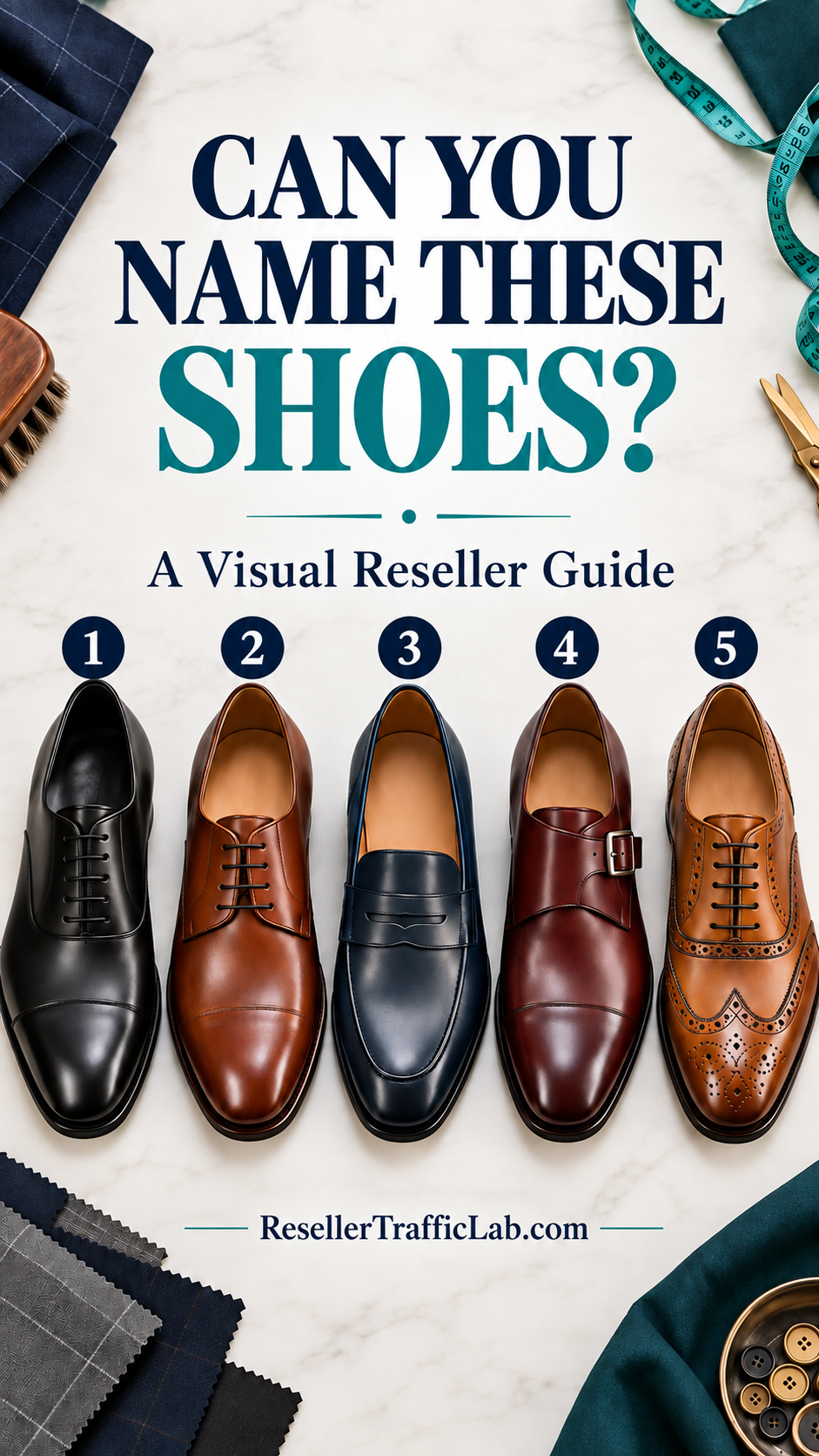
Shoes shown in the visual
- Oxford: a lace-up shoe with closed lacing, where the eyelet sections are attached beneath the vamp.
- Derby or blucher: a lace-up shoe with open lacing, where the eyelet sections sit on top of the vamp.
- Loafer: a slip-on shoe without laces. The example shown resembles a penny loafer.
- Monk strap: closes with one or more straps and buckles instead of laces. The visual shows a single-monk style.
- Wingtip brogue: a shoe with a wing-shaped toe cap and decorative perforations. The example shown also uses a lace-up construction.
Additional styles worth knowing
- Wholecut: an upper formed primarily from one continuous piece of leather, with minimal visible seaming.
- Chelsea boot: an ankle-height pull-on boot with elastic side panels, usually without laces.
- Loafer variations: penny, tassel and horsebit are useful subtype terms when the matching feature is present.
Toe and decoration terms
- Plain toe: no added seam runs across the toe.
- Cap toe: a distinct stitched section crosses the front of the toe.
- Wingtip: the toe cap extends backward in a wing-like W shape.
- Brogue or broguing: decorative perforations. Broguing can appear on several shoe families, so it does not automatically make a shoe an Oxford.
Build clearer listing keywords
- Start with the brand and the basic shoe family: Oxford, Derby, loafer, monk strap or boot.
- Add the toe or decoration only when visible: cap toe, wingtip, plain toe or brogue.
- Record the marked size and width, color, upper material, lining, outsole, country of origin and condition.
- Photograph the size markings, soles, heels, insoles, wear and any model or style numbers.
- Check sold listings for genuinely comparable pairs before estimating resale value.
A clear description might read: men's brown leather cap-toe Oxford dress shoes, size 10 D. Every phrase should be supported by the shoe and its markings.
Style alone does not establish resale value
A familiar style can help with identification and search wording, but it does not prove that a pair is valuable. Brand, model, materials, construction, size, condition, current demand and actual sold-price history all matter. Inspect the shoes carefully and compare completed sales before buying inventory.
What matters beyond the shoe style
There is not enough reliable evidence to claim that smaller sizes, larger sizes or any one color always sells faster or for more money. Size and color affect the buyer pool, but neither guarantees a faster sale or higher price. Use evidence from genuinely comparable sold pairs.
- Marked size and width: enter the closest supported regional size and record the size and width shown inside the shoe. Add helpful measurements for vintage or worn pairs without replacing the marked size.
- Brand and model: photograph model or style numbers and identify the exact model when the markings support it.
- Material and construction: record the upper, lining and outsole materials, visible construction details and country of origin.
- Condition: show toe creasing, heel and outsole wear, interior wear, cracking, stains, repairs and other flaws.
- Accurate item specifics: complete the available brand, size, width, color, style and material fields so buyers can find the listing through search filters.
- Comparable sales: compare the same brand and model in a similar size range, material and condition before estimating value.
Research sources
The terminology in this guide was checked against footwear references from established shoemakers. Product language can still vary, so compare the construction visible on the pair in hand.
- Clarks: Types of Men's Dress Shoes — Oxford, Derby, loafer, brogue and wingtip distinctions.
- Crockett & Jones: Shoe Style Guide — monk straps, loafers and Chelsea boots.
- Carmina: Wholecut Oxford Shoes — single-piece leather upper and heel seam construction.
- eBay Seller Center: Item Specifics — how size, width, color, style and other accurate details help buyers find listings.
- eBay: How to List Sizes — standardized footwear sizing and additional sizing details.