
When a reseller knows the name of a dress style, it becomes easier to research similar items and write a listing that matches the words buyers use. Start with the garment's overall shape, then describe its visible details.
Eight common dress styles
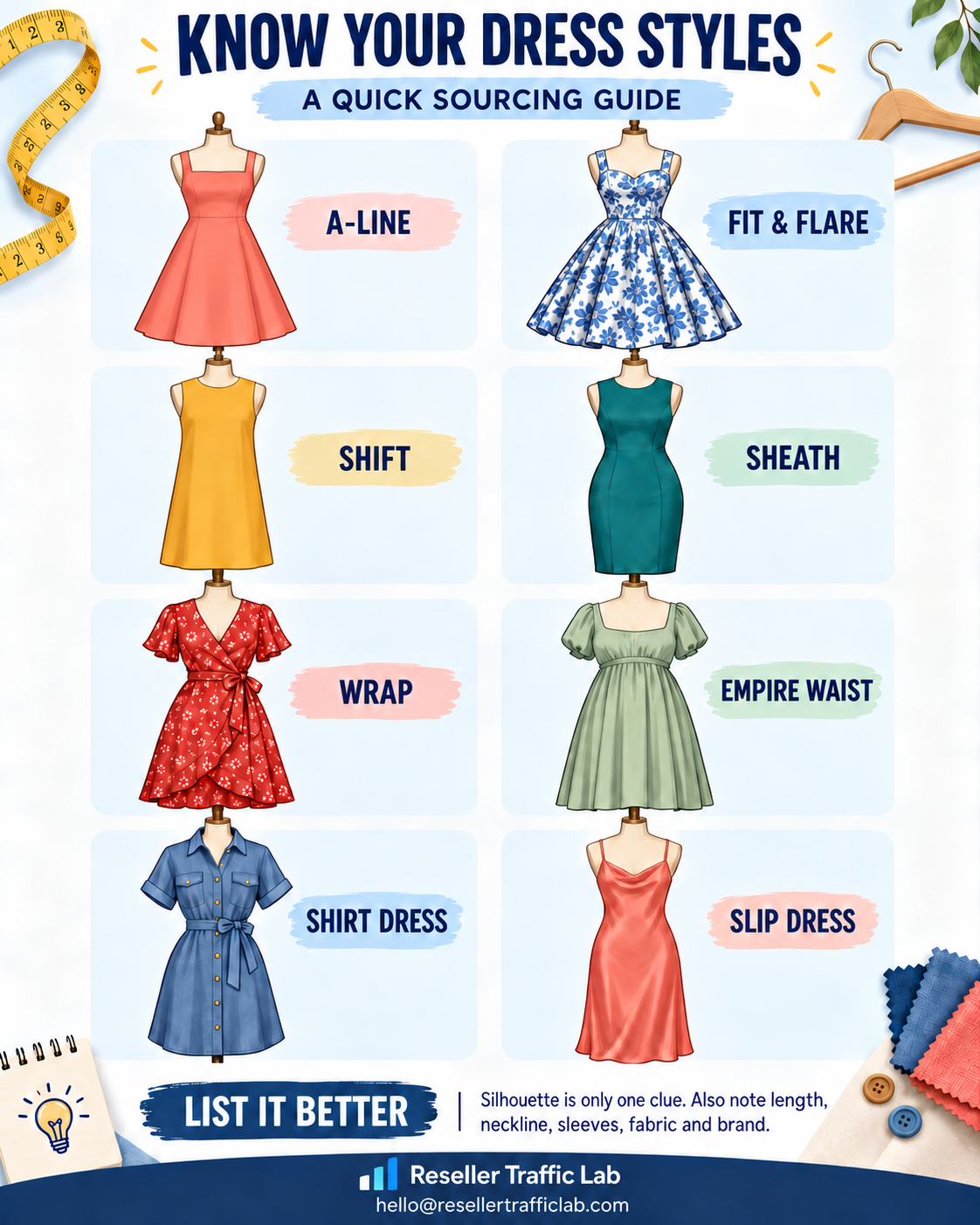
- A-line: fitted through the upper portion and widening gradually toward the hem.
- Fit and flare: fitted through the bodice or waist with a distinctly fuller skirt.
- Shift: a relaxed, relatively straight shape with little waist definition.
- Sheath: a close, structured shape that follows the body without a full skirt.
- Wrap: one front panel crosses over the other, often creating a V neckline and tie waist.
- Empire waist: the waist seam sits directly below the bust, with fabric falling from that high point.
- Shirt dress: uses shirt details such as a collar and button front in a dress-length garment.
- Slip dress: a simple, fluid dress commonly made with narrow shoulder straps.
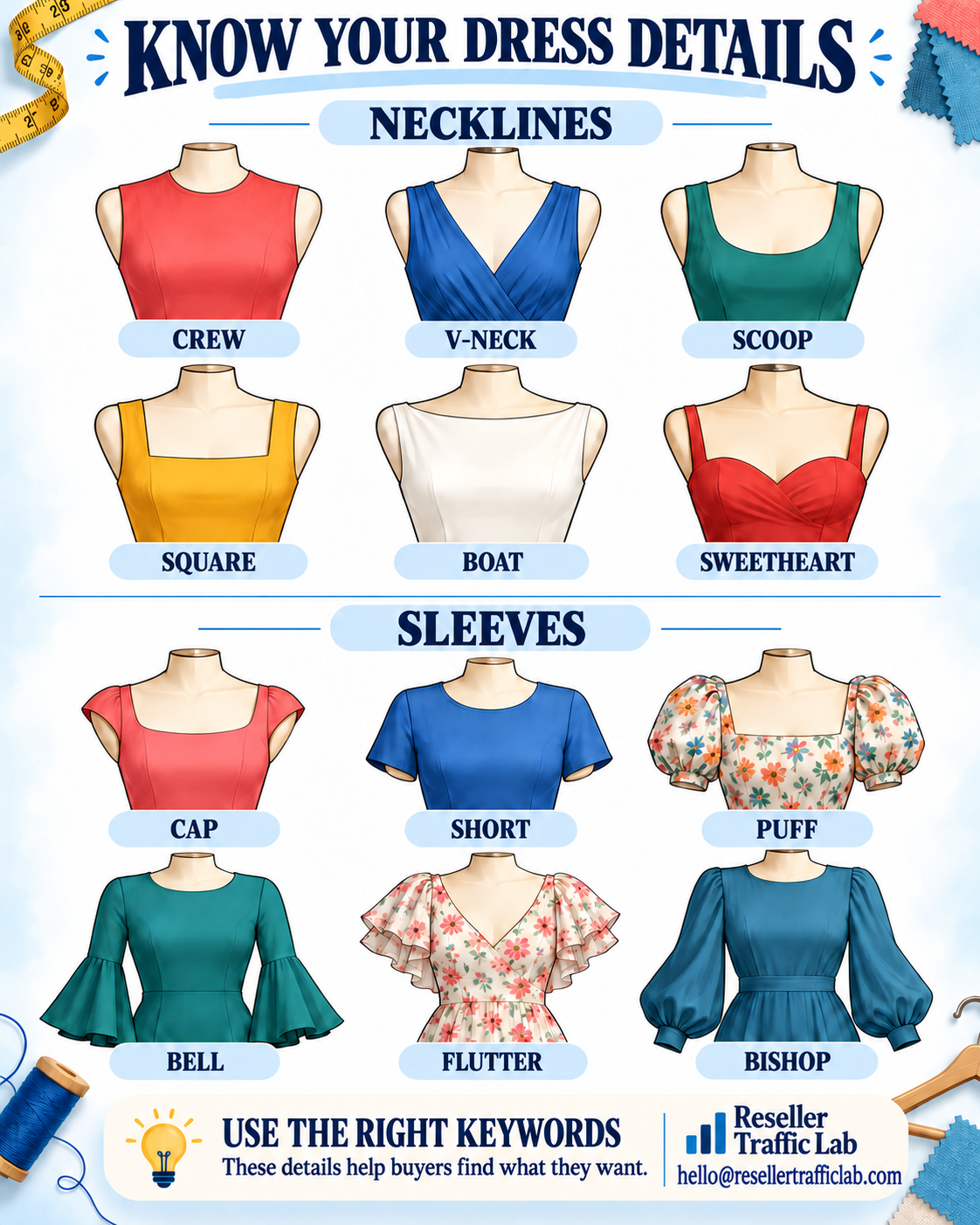
Common neckline and sleeve keywords
Add the dress length and construction details
Length and construction help separate dresses that share the same basic silhouette. Use the garment and its measurements rather than estimating from a photograph.
| Detail | Terms to verify | What to check |
|---|---|---|
| Length | Mini, knee-length, midi, tea-length, maxi, high-low | Measure shoulder to hem and describe where the hem is intended to fall. |
| Waist or bodice | Natural waist, empire waist, drop waist, smocked, ruched, corset-style | Look for the waist seam, gathering, elastic, boning or shaped panels. |
| Closure | Pullover, back zipper, side zipper, button front, hook-and-eye, tie waist | Test the closure and show it in a photograph. |
| Features | Lined, unlined, pockets, adjustable straps, removable belt | Confirm the feature is present and state what is included. |
Record fabric, color, pattern and visible details
Read the fiber-content and care labels whenever they are present. Satin, chiffon, velvet and lace may describe a weave, finish or construction rather than the fiber itself, so do not substitute appearance for the label's material information.
- Fiber or material: cotton, linen, rayon, viscose, polyester, silk, wool or a verified blend with percentages.
- Fabric or finish: knit, denim, satin, chiffon, lace, velvet, crochet or ribbed when the term accurately describes the garment.
- Pattern: floral, striped, plaid, polka dot, paisley, geometric, abstract, animal print or colorblock.
- Embellishment: embroidery, sequins, beads, appliques, fringe or ruffles. Photograph missing or damaged embellishments.
Measurements that reduce fit uncertainty
Lay the dress flat without stretching it unless stretch is being measured. State that the measurements are approximate and explain whether a flat width should be doubled.
- Bust: measure straight across from armpit to armpit.
- Waist: measure across the natural or constructed waistline.
- Hips: measure across the fullest part when the silhouette makes this useful.
- Length: measure from the highest shoulder point to the hem.
- Sleeve: state where the measurement begins, such as the shoulder seam.
Photograph the brand, size, fiber-content and care labels. The tagged size belongs in eBay's size field; measurements give the buyer additional fit information rather than replacing the label size.
Dress condition and photograph checklist
- Check the underarms, neckline, cuffs, waist, seat and hem for stains, wear, pulls or repairs.
- Inspect seams, lining, zippers, buttons, hooks, straps and embellishments.
- Look for snags, pilling, fading, stretched elastic, odors and missing pieces.
- Show the front, back, side, labels, closures, construction details and every flaw in clear photographs.
- Make the selected condition, written description, item specifics and photographs agree.
Build a clearer dress listing
- Identify the overall silhouette, such as shift, sheath, wrap or fit and flare.
- Add the neckline and sleeve style only when each term is clearly supported by the garment.
- Record the dress length, fabric or material, color, pattern, size and brand.
- Measure the garment and photograph the label, material tag, closures and important construction details.
- Check sold listings for genuinely comparable dresses before estimating resale value.
A practical description might combine several attributes: floral fit-and-flare midi dress with a square neckline and puff sleeves. Each phrase should describe something a buyer can see in the photographs.
Build a stronger dress title using the RTL method
RTL title order: Brand + department when useful + exact item type + verified distinguishing details.
- Start with the verified brand and the clearest item identity.
- Add the product line, tagged size, color, material, fit or style that distinguishes the dress.
- Put the strongest search terms near the beginning in a natural order.
- Remove filler and repeated words, check spelling, and stay within eBay's 80-character limit.
This is the same approach used in the RTL paid title guide and store-review recommendations. A title formula is a guide, not a reason to force every available detail into the title. Verified facts such as brand, item type, product line, size, color, material and fit come before optional aesthetic terms.
One-page listing check
| Listing area | Dress details to confirm |
|---|---|
| Title | Brand, exact item type, product line, size and the strongest verified details |
| Item specifics | Brand, department, size, size type, dress length, style, sleeve length, neckline, color, pattern, material, occasion, features and condition |
| Description | What it is, condition, measurements, construction details, contents and anything missing |
| Photos | Every angle, labels, closures, fabric texture, measurements and flaws |
| Research | Comparable sold dresses with the same product line, size, condition and important features when available |
Use dress terminology carefully
Fashion terms sometimes overlap, and brands may use them differently. A-line and fit-and-flare are especially easy to confuse, as are shift and sheath. Use the guide as a visual starting point, then compare the garment's structure, waist placement, skirt fullness and construction before choosing the final wording.